
Most car owners assume the choice between a quick lube shop and a dealership is simple: pay less and wait less at the quick lube, or pay more and get more at the dealership. The quick lube vs dealership differences run deeper than price and speed, though. Service scope, technician training, warranty documentation, and long-term engine health all factor into a decision that most drivers make in under 60 seconds. This article breaks down each of those dimensions so you can make a choice that actually fits your vehicle, your schedule, and your budget.
Table of Contents
- Key takeaways
- Quick lube vs dealership differences in service scope
- Cost comparison: upfront savings vs long-term value
- Convenience factors that actually affect maintenance habits
- Warranty considerations and service documentation
- Choosing the right option for your situation
- Our take on the quick lube vs dealership debate
- Experience the Express Lube & Car Care difference
- FAQ
Key takeaways
| Point | Details |
|---|---|
| Service scope varies widely | Quick lubes focus on speed and basic services; dealerships offer brand-specific diagnostics and full inspections. |
| Pricing reflects depth of service | Quick lubes cost less upfront, but missed inspections can lead to expensive repairs down the road. |
| Convenience favors quick lubes | No-appointment service and extended hours make quick lubes easier to fit into a busy schedule. |
| Documentation protects your warranty | Detailed service records matter more than where you get the work done, per FTC guidance. |
| Match the shop to the job | Routine maintenance suits quick lubes well; complex diagnostics or warranty repairs belong at a dealership. |
Quick lube vs dealership differences in service scope
The most significant gap between these two options is not price. It is what actually happens to your vehicle while it is in the bay.
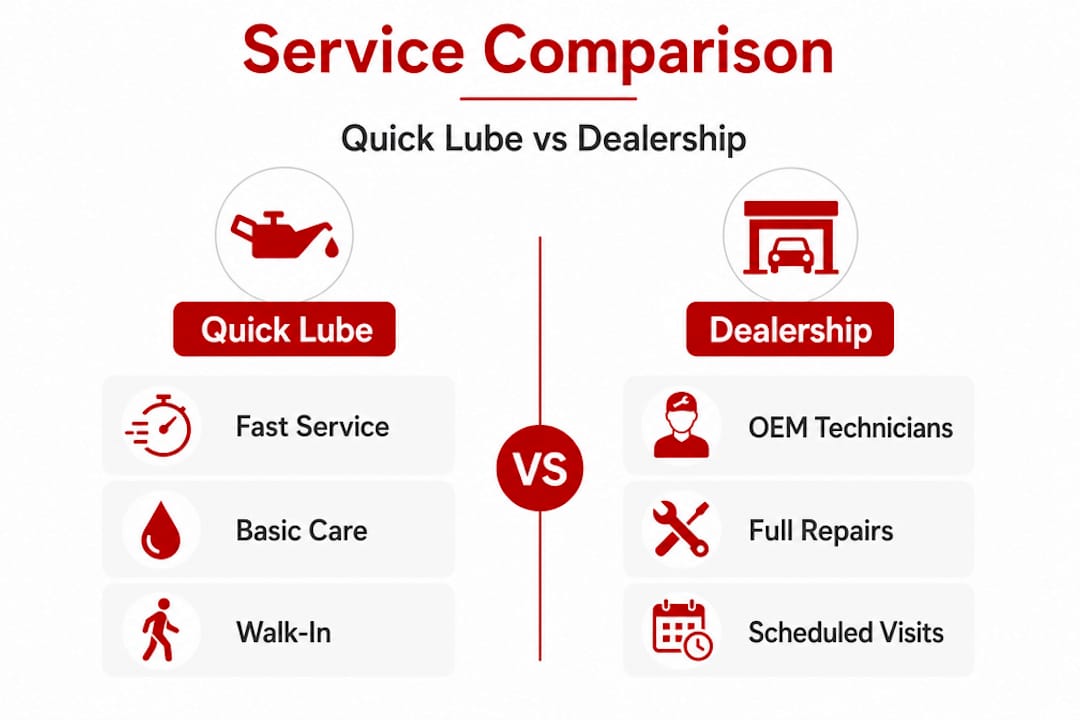
Quick lube shops prioritize fast oil changes with minimal inspections, while dealerships offer comprehensive vehicle system inspections performed by OEM-trained technicians. That distinction matters more than most drivers realize. A quick lube visit typically covers:
- Engine oil and filter replacement
- Tire pressure check
- Basic fluid level inspection (coolant, brake fluid, windshield washer)
- Air filter visual check
- Battery terminal inspection
These are the fundamentals. They keep your car running between major service intervals. What they do not include is a deep diagnostic scan, a detailed brake inspection, or a check of brand-specific systems that require manufacturer-level software to read correctly.
Dealership service departments, by contrast, employ technicians who have completed OEM-specific training programs. A Ford-certified technician, for example, has worked through Ford’s own curriculum and uses Ford’s proprietary diagnostic tools. That level of specialization matters when your vehicle throws a fault code that a generic scanner cannot fully interpret. Technician expertise and proper diagnostic tools are the real dividing line between shops, not just the brand on the sign outside.
Pro Tip: Ask any shop whether their technicians hold ASE certifications. ASE-certified technicians have passed standardized competency exams, which gives you a baseline quality assurance regardless of whether you are at a quick lube or a dealership.
The practical takeaway here is that quick lubes are well-suited for routine, interval-based maintenance. Dealerships earn their place when your vehicle needs brand-specific diagnostics, recall work, or repairs that require OEM parts under warranty.
Cost comparison: upfront savings vs long-term value
Price is where the difference between quick lube and dealership is most visible, and also most misunderstood.
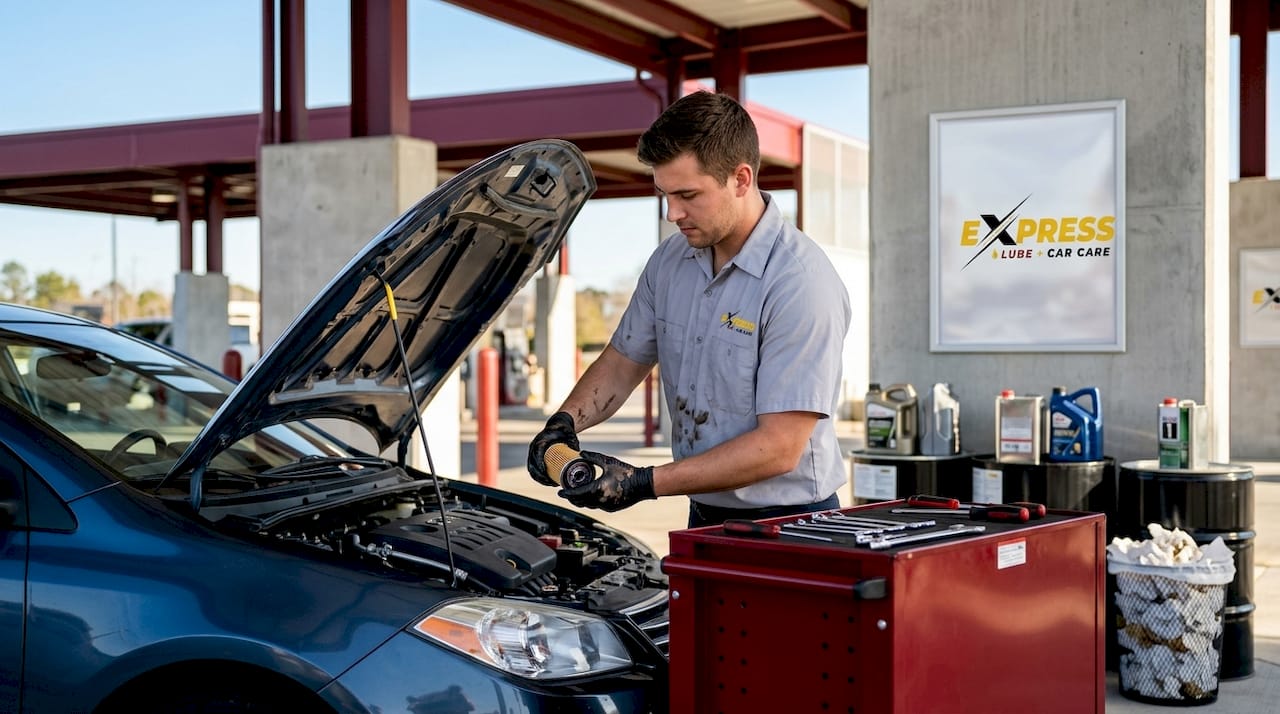
A standard oil change at a quick lube typically runs between $40 and $80 for conventional or synthetic blend oil. A dealership performing the same service often charges $80 to $150 or more, depending on the vehicle make and oil specification required. On the surface, that looks like a straightforward win for the quick lube. The full picture is more complicated.
| Service Factor | Quick Lube | Dealership |
|---|---|---|
| Oil change price range | $40 to $80 | $80 to $150+ |
| Inspection depth | Basic visual checks | Comprehensive multi-point |
| Technician training | General or ASE-certified | OEM-certified |
| Parts used | Aftermarket or OEM-equivalent | OEM or manufacturer-approved |
| Time to complete | 15 to 30 minutes | 1 to 2+ hours |
The hidden cost factor is what gets overlooked. Using low-quality oil or filters, or extending service intervals, can cause engine damage over time and lead to costly repairs. A missed brake wear indicator or a slow coolant leak that goes unnoticed during a rushed service can turn a $60 oil change into a $900 repair six months later.
Here is how to think about it practically:
- If your vehicle is under 80,000 miles and running without warning lights, a reputable quick lube handles routine oil changes well.
- If your vehicle is approaching a major service milestone (60,000 or 100,000 miles), a dealership inspection catches wear items before they become failures.
- If you drive a European or luxury vehicle with specific oil grade requirements, verify that any shop you use stocks the correct specification before you hand over your keys.
You can review oil change pricing factors in detail to understand what drives cost differences across service types. The goal is not always to find the cheapest option. The goal is to find the right value for where your vehicle is in its service life.
Convenience factors that actually affect maintenance habits
Here is something the industry does not talk about enough: the shop you actually visit consistently is better for your car than the shop you intend to visit but never get to.
Quick lube services typically do not require appointments and offer faster service times with extended hours including weekends. Dealerships generally require scheduled appointments and operate primarily on weekday business hours. That operational difference has a real effect on how often drivers actually follow their maintenance schedule.
Consider a driver who works 9 to 5 Monday through Friday. Getting to a dealership service department means taking time off work, arranging a loaner vehicle, or sitting in a waiting room for two hours on a Saturday morning when appointments fill up fast. The result? Many drivers push their oil change back by 2,000 or 3,000 miles beyond the recommended interval because the friction of scheduling is too high.
The convenience advantages of a quick lube break down into four practical areas:
- No appointment required. You can pull in on a Tuesday evening or a Sunday afternoon without planning ahead, which removes the single biggest barrier to staying on schedule.
- Faster turnaround. Most quick lube services are completed in 15 to 30 minutes. You can stay in your vehicle at many locations, which saves time and reduces the disruption to your day.
- Extended operating hours. Evenings and weekends are standard at most quick lube locations, aligning with when most working adults actually have time for errands.
- Lower planning burden. Routine maintenance becomes something you handle when you notice the mileage sticker, not something you schedule three weeks in advance.
Dealerships do offer convenience features of their own, including shuttle services, loaner vehicles, and online scheduling tools. But for routine oil changes and fluid checks, the time investment at a dealership is simply higher. For drivers managing a packed schedule, that difference determines whether maintenance happens on time or gets deferred.
Warranty considerations and service documentation
This is the area where most car owners carry the biggest misconceptions, and where the stakes are highest.
The FTC is clear that failing to follow required routine maintenance can harm your warranty coverage. What the FTC also makes clear is that you are not required to use a dealership to maintain your warranty. The Magnuson-Moss Warranty Act protects your right to have your vehicle serviced at any qualified shop without voiding your warranty, as long as the service meets manufacturer specifications.
Warranty companies may require maintenance records showing proper service including date, mileage, oil type, and inspections to approve claims. Shops that maintain thorough documentation have a practical advantage when disputes arise.
Dealerships have a structural advantage here. Their service records are digitally logged, tied to your VIN, and often accessible to warranty administrators directly. When a warranty claim comes up, the paper trail is already in order.
Quick lube shops can and do provide service documentation, but record quality varies by shop. Some locations print detailed receipts showing oil grade, filter part number, mileage, and technician notes. Others hand you a generic receipt with minimal detail. That variability is the real risk, not the fact that you went to a quick lube.
Pro Tip: After every oil change at any shop, keep a physical or digital record that includes the date, mileage, oil type and viscosity, filter brand, and any additional services performed. A simple note in your phone or a folder in your glove box is enough to protect your warranty coverage.
Your routine car maintenance checklist should include a documentation habit, not just a service interval reminder. The two work together.
Choosing the right option for your situation
Understanding the quick lube vs dealership differences is useful. Knowing how to apply that understanding to your specific situation is what actually protects your vehicle.
| Priority | Best Option | Reason |
|---|---|---|
| Speed and convenience | Quick lube | No appointment, fast turnaround, flexible hours |
| Brand-specific diagnostics | Dealership | OEM tools and certified technicians |
| Routine oil change | Quick lube | Cost-effective and sufficient for standard intervals |
| Warranty repair or recall | Dealership | Required for coverage and OEM parts |
| Budget-conscious maintenance | Quick lube | Lower labor rates for standard services |
| Pre-purchase inspection | Dealership | Comprehensive multi-point inspection |
A few guiding principles help clarify the decision:
- Use a quick lube for oil changes, fluid top-offs, and basic filter replacements when your vehicle is running normally and within its standard service schedule.
- Use a dealership when your vehicle is under warranty, when you need recall work performed, or when a warning light requires brand-specific diagnostic software.
- Verify technician credentials at any shop you use regularly. ASE certification is a reliable baseline for quick lube technicians. OEM certification matters most for brand-specific repairs.
- Keep your own maintenance records regardless of where you go. Detailed service documentation is your protection, not the shop’s brand name.
The FTC’s antitrust action requiring divestiture of 45 quick-lube shops in 2026 underscores that competition among quick lube providers directly affects pricing and service quality for consumers. Choosing a reputable, well-reviewed shop matters more than the category it falls into.
Our take on the quick lube vs dealership debate
I’ve worked in and around automotive service long enough to have a clear opinion on this debate, and it is not the one most people expect.
The quick lube vs dealership argument is often framed as quality versus convenience. In my experience, that framing is wrong. The real variable is consistency. I’ve seen quick lube bays where every technician follows a documented process, uses the correct oil specification, and hands the customer a receipt detailed enough to satisfy any warranty administrator. I’ve also seen dealership service departments where upselling takes priority over honest inspection, and where the “certified” label on the wall does not reflect what happens in the bay.
What I’ve learned is that the shop’s culture and accountability systems matter more than the category. A quick lube with trained, accountable technicians and thorough documentation beats a disorganized dealership service department every time for routine work.
Where I do give dealerships a genuine edge is on complex diagnostics and warranty-related repairs. The OEM tools and training are real advantages that independent shops and quick lubes cannot fully replicate for brand-specific issues. For a transmission fault code on a newer vehicle, I would not skip the dealership.
My practical advice: find a quick lube you trust for routine intervals, build a relationship with a dealership service department for your vehicle’s make, and keep your own records from both. That combination gives you the best of both worlds without overpaying for services that do not require dealership-level expertise.
— Express Lube & Car Care
Experience the Express Lube & Car Care difference
At Express Lube & Car Care, we built our service model around a simple belief: drivers should not have to choose between quality and convenience. Our certified technicians handle oil changes, brake inspections, engine services, and more with no appointment needed. You can pull in before work, during lunch, or on a weekend and leave with a detailed service receipt that documents everything your warranty administrator would ever need to see.
We offer oil change and service specials designed for budget-conscious drivers who refuse to compromise on quality. Military members and healthcare providers receive special discounts as our way of giving back to the community. Whether you drive a daily commuter or a newer vehicle still under manufacturer warranty, our team delivers the thoroughness of a dealership service visit at quick lube speed. Check our current maintenance coupons and stop in when it fits your schedule.
FAQ
What is the main difference between quick lube and dealership service?
Quick lube shops focus on fast, routine services like oil changes and fluid checks, while dealerships offer comprehensive inspections and brand-specific diagnostics using OEM-certified technicians. The difference is most significant for complex repairs or warranty-related work.
Does using a quick lube void my car warranty?
No. Under the Magnuson-Moss Warranty Act, you can use any qualified service shop without voiding your warranty, as long as the service meets manufacturer specifications and you maintain detailed maintenance records showing the date, mileage, and oil type used.
Is quick lube pricing really cheaper than a dealership?
Quick lube oil changes typically cost $40 to $80, compared to $80 to $150 or more at a dealership. However, the total cost of ownership can favor the dealership if missed inspections at a quick lube allow small problems to become expensive repairs.
When should I choose a dealership over a quick lube?
Choose a dealership for recall work, warranty repairs, brand-specific diagnostic fault codes, or major service milestones that require OEM parts and certified technician expertise. Routine oil changes and fluid services are well-handled by a reputable quick lube.
How do I protect my warranty when using a quick lube?
Keep every service receipt showing the date, mileage, oil viscosity, filter part number, and any inspections performed. The FTC confirms that proper maintenance documentation is what protects warranty coverage, not the type of shop you use.