

It is May 2026, your car will not start, a warning light is on, or you are sitting in a parking lot searching “nearest mechanic to me” because you need help now. The fastest option may be a local garage nearby, or it may be a mobile mechanic who can come directly to your driveway, office, or roadside location.
This guide will help you find the closest trustworthy mechanic, compare local and mobile options, ask the right questions, and avoid costly repair mistakes.
You will learn how to find help with:
Speed: using maps, filters, and direct calls to find available mechanics fast.
Reliability: checking credentials, reviews, insurance, and warranties.
Fair pricing: comparing each quote, diagnostic fee, parts choice, and final invoice.
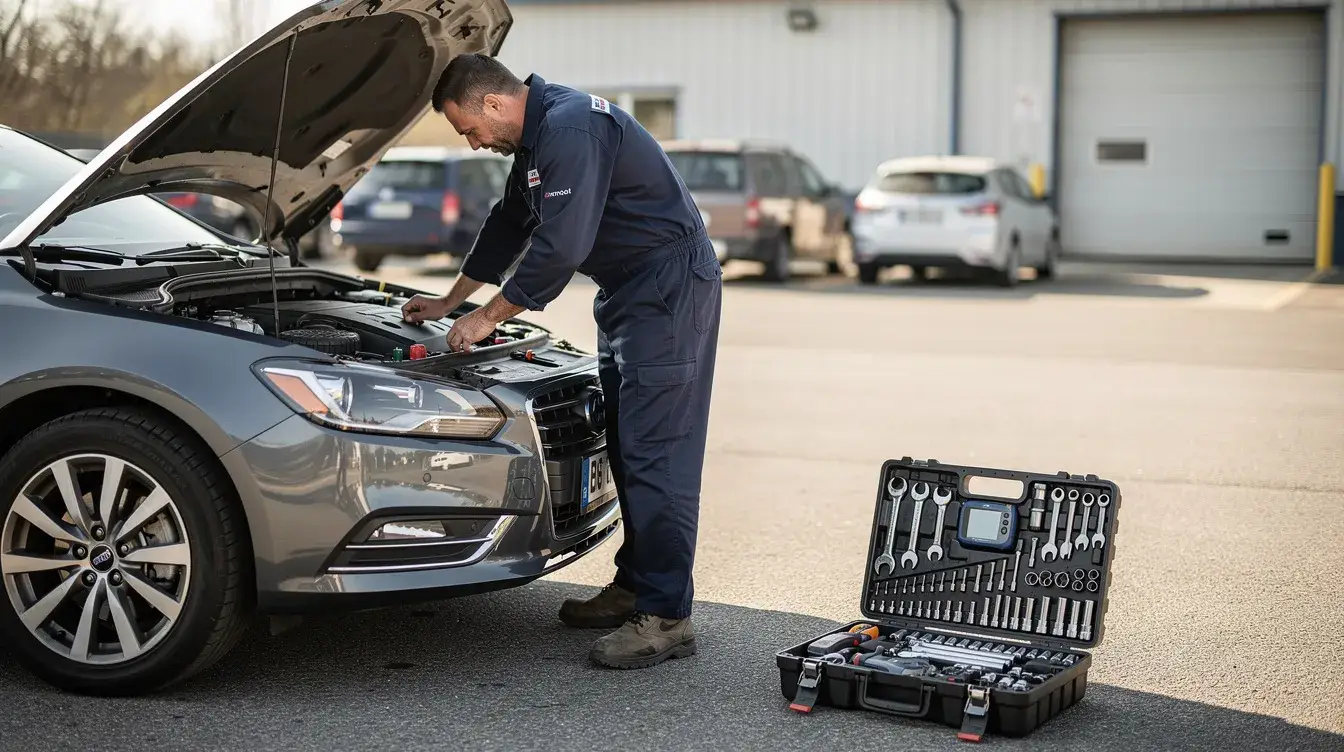
How To Find The Nearest Mechanic To Me Right Now
When you need the nearest mechanic to me, start with your phone and make decisions in minutes, not hours. Your goal is to find someone close, open, well-reviewed, and capable of handling your specific car problem.
Use this quick process:
Search in Google Maps or Apple Maps for terms like “mechanic near me,” “auto repair near me,” and “mobile mechanic near me.” Check the actual distance in miles or kilometers, not just the top result.
Filter by open hours. If it is after 6 PM, a weekend, or a public holiday, use the “open now” filter and check whether emergency or after-hours service is available.
Prioritize nearby options within 5–10 km or 3–6 miles if the car can still be driven. If the vehicle will not start, look harder at mobile auto repair or towing-supported garages.
Scan ratings before calling. Aim for 4.3+ stars, at least 30–50 reviews, and recent reviews from 2025–2026 so you know the current service quality.
Check local reviews on platforms like Google Maps or Yelp, watching for repeat complaints about surprise charges.
Read review details, not just the average score. Look for comments about punctuality, honest pricing, clear communication, and whether customers were satisfied after the job was completed.
Call 2–3 top candidates directly from the map app. Ask: “Can you look at this today?”, “What is your estimated arrival or drop-off time?”, and “Can you give me a rough price range before I approve work?”
For mobile mechanics, check reviews and ratings to find someone with consistent positive feedback and transparency about pricing.
Save 1–2 reliable nearby garages and one trusted mobile mechanic in your phone now. The next emergency will be much easier.
Tip: If the shop has a website, use it to confirm opening hours, service area, certifications, and whether you can request a booking online.
Choosing Between A Local Garage And A Mobile Mechanic
“Nearest” can mean two different things: the closest workshop you can drive or tow to, or the mobile mechanic who can reach your exact location fastest. Both can be the right answer depending on the repair.
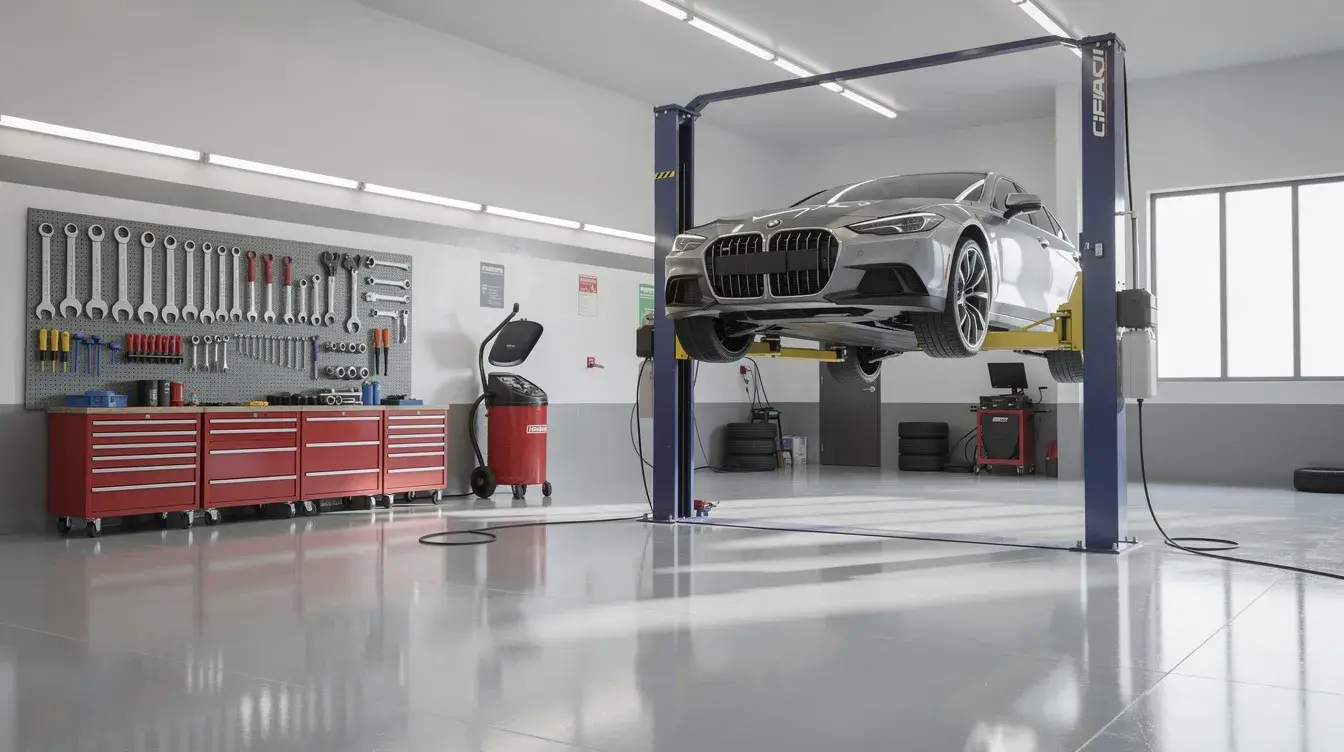
A traditional auto repair shop has a fixed location, hydraulic lifts, specialist equipment, parts access, and more workspace. A mobile mechanic brings tools, scanners, and common parts to your home, office, or parking area.
Mobile auto repair services generally allow mechanics to perform repairs on-site, providing convenience and flexibility for vehicle owners. Because mobile mechanics have lower overhead, they often charge rates comparable to or slightly less than traditional shops, while providing the added benefit of on-site service.
Use this simple guide:
Local garage – best when the work needs heavy equipment, a lift, or a controlled workshop. Choose a garage for major engine work, transmission repair, advanced wheel alignment, bodywork, frame damage, recalls, or an MOT/inspection that legally requires certified equipment.
Local garage – best when you need brand-specific tools. Select a specialty shop that focuses specifically on your vehicle’s make and model, especially for Audi, BMW, Mercedes, Toyota hybrid models, Tesla, VW, or other specialist vehicles.
Local garage – best when you want to inspect the facility. Watch out for extreme disorganization in the garage bays, which often reflects careless workmanship.
Mobile mechanic – best when the vehicle is stuck at home, work, or a parking lot. This is ideal for a flat battery, car won’t start, brake pad changes, oil changes, simple diagnostics, and a pre-purchase inspection on a used car.
Mobile mechanic – best when you want convenience. You avoid towing, lose less time at work, and can often speak directly with the technician while the vehicle is being checked.
Mobile mechanic – best when the service area covers your street or postcode. Ask before booking because many mobile mechanics have a radius limit.
Mobile mechanic – best when the technician is qualified. When hiring a mobile mechanic, consider their certifications, such as ASE certification or manufacturer-specific training, to ensure they are qualified.
Key Factors To Check Before You Pick The Nearest Mechanic
Closeness alone is not enough. A mechanic who is five minutes farther away but properly certified, insured, and transparent may save you hundreds of dollars and a lot of stress.
Before approving any repair, check these points:
Look for technicians certified by the National Institute for Automotive Service Excellence (ASE). ASE is a recognized credential in North America, and you can learn more from the official ASE certification information.
Check if the shop employs a Master Technician certified in all eight automotive service areas.
Confirm the certificates are framed in the lobby and show current, valid dates.
Look for manufacturer-specific training, especially for complex models. For example, a Toyota Corolla 2018 brake job is straightforward for many mechanics, but a BMW electrical fault or Tesla warning light may need brand-specific training.
Ensure the shop invests in the factory-specific scanning software required for your car.
Verify specialized high-voltage training if you own an electric or plug-in hybrid vehicle.
Seek facilities approved by the American Automobile Association (AAA) or accredited by the Better Business Bureau (BBB).
Check licenses and business registration where applicable, especially for mobile mechanics operating independently.
Confirm that the mobile mechanic carries liability insurance and is licensed to work in your area, if applicable, to protect yourself during the service.
Request a formal warranty on both the replacement parts and the shop’s labor.
Look for shops offering a minimum warranty of 12 months or 12,000 miles.
Inquire whether they use Original Equipment Manufacturer (OEM) parts or aftermarket components.
Mandate a detailed, written estimate separating parts, labor, and shop fees before work begins.
Ask upfront if the diagnostic fee is a flat rate and whether it applies toward the final repair cost.
Confirm the shop will explicitly call you for authorization before performing any unexpected repairs.
Avoid shops that refuse to explain line items or give evasive, verbal pricing.
Prioritize verified professional credentials, specialized vehicle expertise, transparent communication policies, and local service warranties when selecting a mechanic.
A trustworthy mechanic should be able to explain the problem in plain language. If you ask “Why does my 2018 Toyota Corolla need rear brake pads and rotors?” the answer should be specific, not vague or rushed.
Typical Costs: What You Might Pay The Nearest Mechanic Or Mobile Mechanic
Prices vary by city, vehicle, repair complexity, and parts quality. Still, realistic ranges help you avoid overpaying when you are urgently searching for the nearest mechanic to me.
For 2025–2026, expect roughly:
Oil change: $70–$150, depending on oil type, filter, vehicle size, and local labor rates.
Brake pad replacement: $180–$450 per axle, depending on pad quality, sensors, and whether rotors also need work.
Battery replacement: $160–$350, with AGM, premium, hybrid-support, and luxury vehicle batteries often costing more.
On-site diagnostic visit by a mobile mechanic: $90–$180, depending on location, time, and the type of diagnostic testing needed.
Mobile mechanic call-out or travel fee: often $20–$60, especially for longer distance, urgent, evening, weekend, or holiday visits.
Mobile auto repair costs generally range from $100 to $500+, depending on the mechanic’s experience, the complexity of the repair, and your location.
Rates for mobile mechanics may vary based on factors such as vehicle make and model, type of service or repair needed, parts and materials required, time required for the job, and your location.
Luxury and imported vehicles can cost more than common models. An Audi, BMW, Tesla, or Mercedes may require more expensive parts, specialist software, and a technician with brand experience. A Honda Civic, Toyota Corolla, or Ford Focus usually has broader parts availability and more mechanics familiar with the platform.
Before you approve the job:
Get at least two quotes from nearby garages if the car can be moved.
Get one quote from a mobile mechanic if the vehicle is stuck or you want on-site service.
Compare warranty, parts quality, timing, and communication, not just price.
Ask whether the diagnostic fee is waived or applied to the final repair cost if you proceed.
Adapt these examples to your local currency and region, but keep the same comparison process.
According to Kelley Blue Book’s OBD-II guide, a diagnostic trouble code can point toward the problem area, but testing is still needed before replacing parts. That is why a proper diagnostic fee can be worth paying when it prevents guesswork.
What Services Can The Nearest Mobile Mechanic Provide?
Modern mobile mechanics can handle much more than jump-starts and tire changes. Many now carry OBD-II scanners, battery testers, jacks, compressors, and common service parts.
Mobile mechanics are equipped to handle a wide range of services, which typically include pre-purchase inspections, oil changes, fluid replacements, filter replacements, tire rotations, brake pad repairs, battery replacements, and diagnostic services.
Common mobile mechanic services include:
Oil and filter changes: useful when you cannot get to a shop or want routine maintenance done at home.
Fluid replacements and top-ups: including coolant, brake fluid, washer fluid, and sometimes transmission-related services when suitable.
Filter replacements: air filters, cabin filters, and oil filters.
Tire rotations: if the mechanic has the right jack, stands, tools, and a safe flat surface.
Brake pad and rotor replacement: common on-site repair when there is safe access and no major seized or damaged components.
Battery testing and replacement: ideal when the car will not start at home or work.
Spark plug changes: often possible on many vehicles, though access varies by engine layout.
Basic suspension work: some shocks, struts, links, and control arm jobs may be possible depending on the vehicle and location.
Belt replacements: some mobile mechanics may offer serpentine belt replacements, depending on the vehicle and tools available.
Diagnostic services: check engine light scans with OBD-II tools, troubleshooting starting problems, rough idle, charging faults, and warning lights.
Pre-purchase inspections: a growing use case in 2025–2026, especially for used cars. The mechanic can inspect for accident damage, test drive the car, scan for hidden faults, and check maintenance condition.
Additional minor work: some mobile mechanics may offer tire changes or minor engine repairs, depending on the vehicle and tools available.
Mobile service does have limits. Complex engine rebuilds, major transmission work, advanced wheel alignment, welding, frame damage, and extensive bodywork usually require a workshop with lifts and specialist equipment.
When you call or submit a booking request, describe the exact symptoms. Say “the engine cranks but will not start,” “the brake pedal vibrates at highway speed,” or “the check engine light flashes under acceleration.” Better details help the mechanic bring the right tools and parts on the first visit.
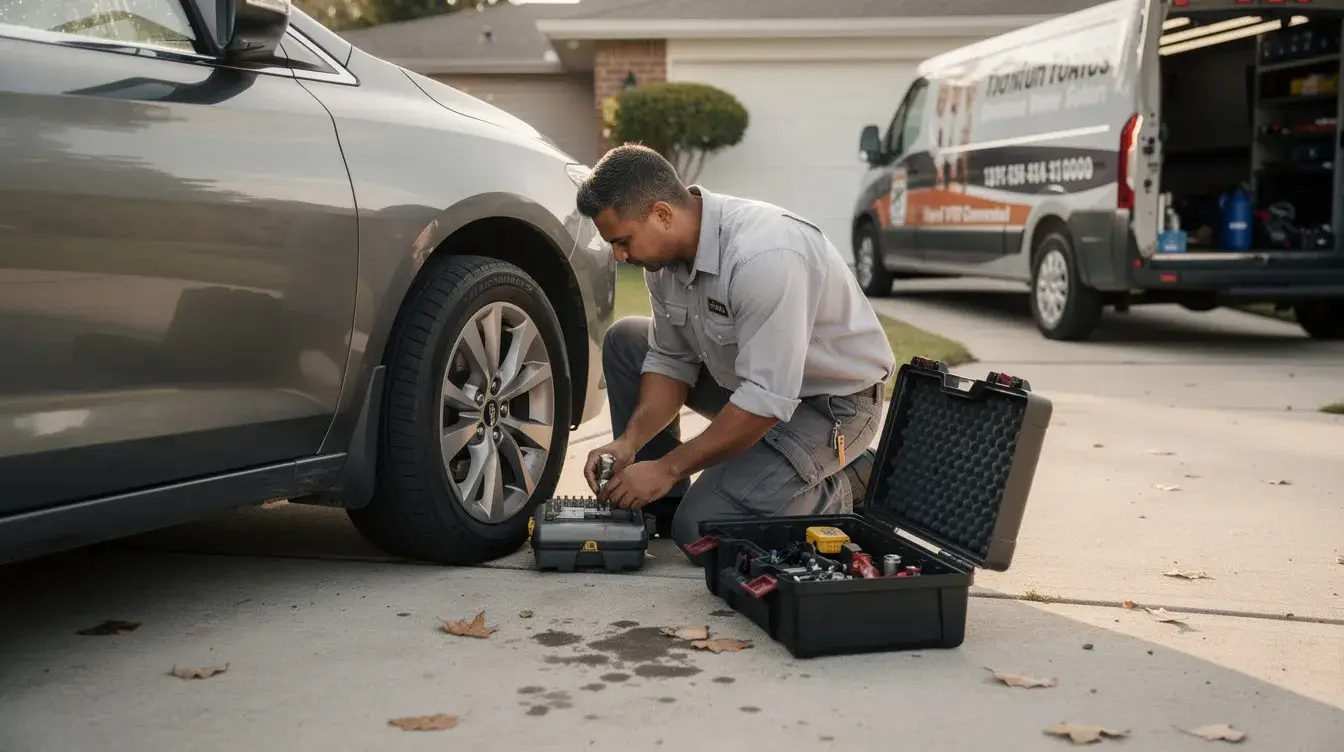
How To Prepare Your Car And Location Before The Mechanic Arrives
A little preparation can save time and money, especially when a mobile mechanic is driving to you. The easier the vehicle is to access, the faster the technician can inspect and repair it.
Before the appointment:
Park the car in a safe, accessible, and legal area.
Choose flat ground with enough space around the vehicle.
Avoid blocking traffic, emergency access, driveways, loading zones, or building entrances.
Gather registration documents, VIN, recent service history, paper invoices, digital records, and any error codes already scanned.
Write down symptoms with dates and conditions. For example: “Since March 2026, there has been a rattling noise above 60 km/h on the right front side.”
Note whether the problem happens when the engine is cold, hot, braking, turning, accelerating, or driving over bumps.
Remove personal items from the work area, trunk, wheel lock storage area, and glovebox if the mechanic needs access.
For home visits, secure pets before the mechanic arrives.
If it is late, provide lighting or park under a safe light source.
Make sure power access is available if the mechanic needs electricity for tools, a battery charger, or diagnostic equipment.
In some apartment or office complexes, permission from building management may be required for repairs in the parking area.
If the vehicle is unsafe to drive, say that clearly on the phone. A good mechanic will help you decide whether mobile service is suitable or whether towing to a garage is safer.
Staying Safe, Avoiding Scams, And Building A Long-Term Relationship
A “nearest mechanic to me” search can get you help quickly, but personal and financial safety still matter. You are trusting someone with your vehicle, your money, and sometimes your location.
Use these rules:
Do not pay the full amount in cash before the work is completed.
A partial deposit may be reasonable for special-order parts, but always get a receipt.
Check the business name, phone number, address, website, reviews, and license against official registries or review sites when possible.
Be especially careful with unfamiliar mobile mechanics who have very few reviews or no verifiable business presence.
Watch for unusually low quotes that are far below other nearby mechanics. This can mean poor-quality parts, hidden fees, lack of insurance, or inexperience.
Walk away if a service advisor pressures you into immediate fixes without prioritizing critical safety items first.
Ask the mechanic to show old parts that were replaced.
Ask for a simple explanation of the work completed before final payment.
Keep copies of written estimates, invoices, warranty documents, and parts details.
If the same mechanic consistently communicates clearly, charges fairly, documents the work, and honors the warranty, save their contact details and use them for regular maintenance.
The best outcome is not just finding the nearest mechanic once. It is turning a stressful breakdown into a long-term relationship with mechanics you trust.
With the right checks, finding a nearby garage or mobile mechanic can be quick, safe, and cost-effective. Next time your car needs service, compare credentials, ask clear questions, get a written quote, and choose the mechanic who gives you confidence before the work begins.