

We have all experienced that disheartening moment: you turn the key, and instead of a roaring engine, you are met with silence. For many drivers, especially those in warmer climates like Texas, this is a frequent frustration. Learning how to prolong car battery life involves a combination of understanding its function, adopting preventative habits, and performing routine care.
Why Your Car Battery Struggles in High Temperatures
Your vehicle’s battery is a compact electrochemical device, and its performance is fundamentally linked to ambient temperature. While many associate battery failure with cold weather, extreme heat is a significantly more destructive force.
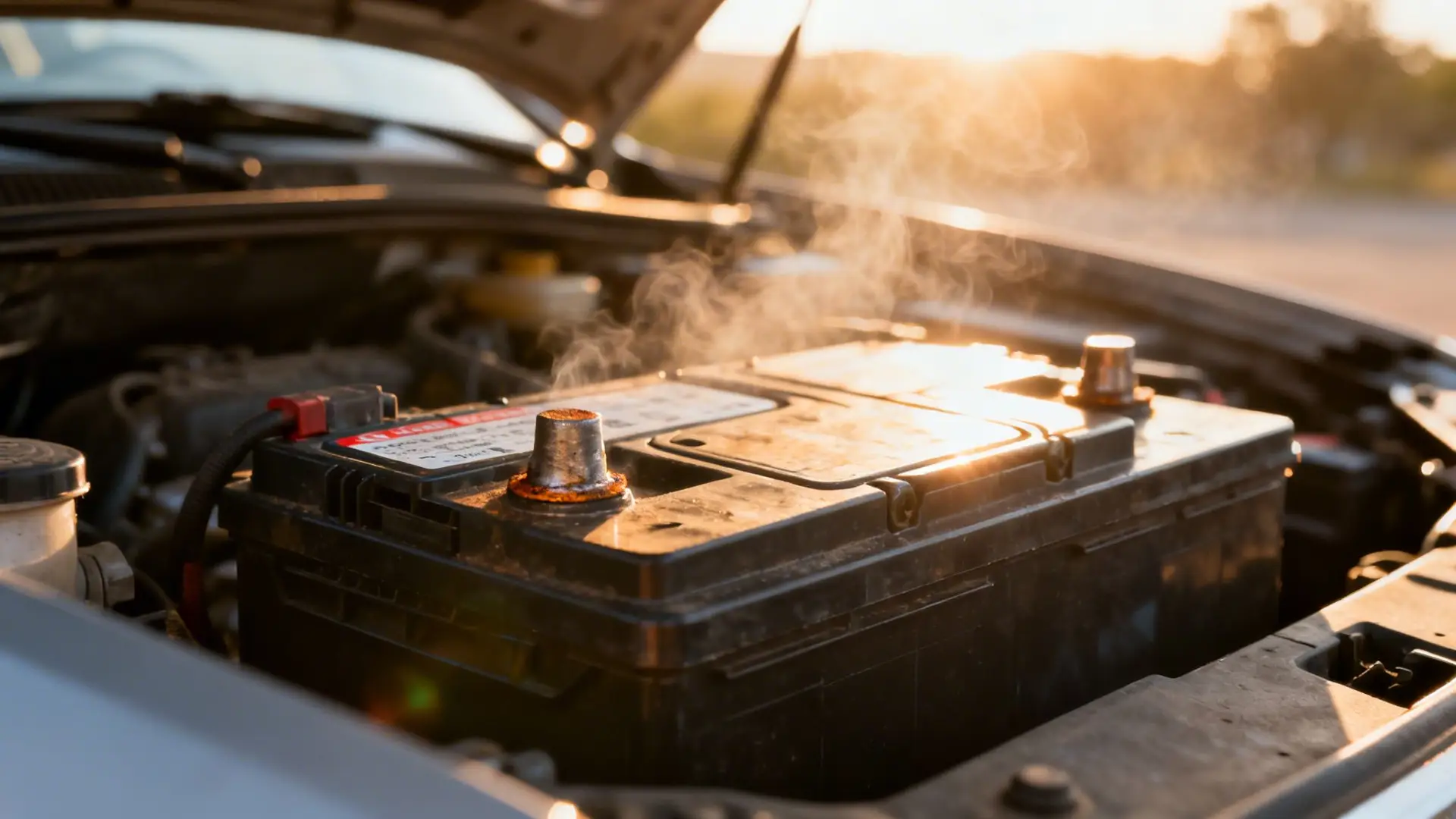
In hot climates, the temperature under the hood can easily exceed 150°F. This intense heat accelerates the chemical reactions within the battery. This process has two primary negative effects: it speeds up the corrosion of the internal lead plates and causes the electrolyte fluid to evaporate.
Consider it analogous to leaving a pot of water on a low boil continuously. The water eventually evaporates, and the pot itself can sustain damage. Similarly, a battery subjected to constant high heat permanently loses its capacity to hold a full charge, resulting in a substantially shorter operational lifespan.
The Science of Heat Degradation
A standard lead-acid car battery functions optimally at approximately 77°F. For every 15-20 degree increase above this optimal temperature, the rate of internal chemical degradation nearly doubles.
In practical terms, a battery that might have a five-year lifespan in a moderate climate could fail in as little as two or three years in the sustained high temperatures of a Texas summer.
This is not simple wear and tear; it is accelerated failure. Extreme temperatures push the battery far beyond its safe battery operating temperature range, leading to rapid performance decline and eventual catastrophic failure.
Key Takeaway: The primary cause of premature car battery failure in hot climates is prolonged exposure to high heat. This exposure permanently weakens the battery by accelerating internal corrosion and fluid evaporation.
Now that we have established the primary adversary, this guide will provide practical steps to mitigate the effects of heat, address other detrimental factors, and maximize the lifespan of your vehicle’s most critical electrical component.
Understanding Your Battery’s Primary Adversaries
A dead battery is a common inconvenience, but understanding its root causes is the first step toward prevention. In regions like North Texas, vehicle batteries face a unique set of challenges that contribute to their early demise.
By identifying what works against your battery, you can take proactive measures to extend its service life.
The Detrimental Effect of High Heat
The most significant environmental factor affecting battery longevity in warm climates is heat. When ambient temperatures surpass 100°F, the under-hood environment becomes a furnace-like setting that is highly destructive to the battery.
This is not anecdotal; it is supported by data. Research from AAA confirms that car batteries in hot climates have an average lifespan of around three years, whereas those in cooler, northern states can last five years or more. You can review the complete findings in this AAA research on car battery longevity.
Heat accelerates the internal chemical processes but also promotes degradation. The high temperatures cause the battery’s electrolyte fluid to evaporate, which exposes the internal lead plates. This leads to corrosion and sulfation—the formation of lead sulfate crystals on the plates, which inhibits the battery’s ability to accept and hold a charge.
Real-World Scenario: Parking your vehicle on black asphalt, such as in a large, uncovered commercial parking lot, subjects the battery to hours of radiated heat. This “silent cooking” process significantly shortens its operational life.
Unseen Factors That Deplete Power
Beyond environmental heat, several other factors contribute to battery drain, often without the driver’s awareness. These “silent killers” are subtle but can lead to significant issues.
A prevalent problem is parasitic drain, which is a low-level electrical draw that continues after the vehicle is turned off.
- Modern Electronics: Onboard computers, security systems, and clock memory require a small but constant supply of power to maintain their settings.
- Aftermarket Add-ons: Accessories like dash cams, upgraded audio systems, or even a phone charger left plugged into a live socket can create a substantial cumulative drain. We explore this topic in our guide on what causes a car battery to drain overnight.
- Faulty Components: A defective alternator diode or a malfunctioning relay stuck in the “on” position can create a slow, persistent power leak that is difficult to detect.
Another major enemy is vibration. Driving over uneven road surfaces or encountering potholes subjects the battery to constant shaking. This mechanical stress can damage the sensitive internal plates and other components, potentially leading to an internal short circuit and complete failure. Ensuring the battery is securely fastened in its mounting bracket is a simple yet crucial preventative measure.
The Impact of Driving Habits on Battery Longevity
The way you operate your vehicle significantly influences your battery’s lifespan. You don’t need specialized equipment to make a difference; simple adjustments to your driving habits can yield substantial benefits, particularly in urban environments with frequent stop-and-go traffic.
Consider the typical daily commute. Short, frequent trips—such as a quick drive to a local store—are particularly detrimental to battery health. Starting the engine requires a significant amount of electrical energy, and the vehicle’s alternator needs adequate time to replenish that energy.
During a short trip, the alternator may not operate long enough to fully restore the battery’s charge. Repeatedly doing this creates a “charge deficit,” which gradually weakens the battery and shortens its lifespan.
The Importance of a Weekly “Maintenance Drive”
To counteract the negative effects of short trips, establish a routine of taking your vehicle for one longer, continuous drive each week. A drive of approximately 30 minutes or more at highway speeds allows the alternator sufficient time to fully charge the battery.
This could be a weekend drive or a longer errand that involves sustained driving. This simple practice ensures the battery receives the complete charge necessary to maintain its health and capacity.
Analogy: A car battery is like a marathon runner. A series of short, intense sprints without recovery is fatiguing. A long, steady run, however, builds endurance and maintains peak condition.
Another beneficial habit is to turn off high-draw accessories—such as the air conditioning, audio system, and headlights—before shutting off the engine. This reduces the initial electrical load during the next startup, resulting in a smoother ignition process and less stress on the battery.
To clarify the relationship between driving style and battery health, the following table outlines common habits and their recommended corrective actions.
Driving Habits and Their Impact on Battery Life
| Driving Habit | Impact on Battery | Recommended Action |
|---|---|---|
| Frequent short trips (under 15 mins) | Creates a charge deficit, as the alternator cannot fully recharge the battery. | Take a continuous 30-minute drive at least once per week. |
| Leaving accessories on after shutdown | Drains the battery while the engine is off, weakening its starting power. | Turn off lights, A/C, and radio before turning off the ignition. |
| Constant stop-and-go traffic | The alternator operates at lower RPMs, reducing its charging efficiency. | Consolidate errands into one longer trip to maintain consistent engine operation. |
| Letting the car sit for weeks | The battery naturally self-discharges, which can lead to a deep discharge state. | Use a battery tender or have someone drive the car for 30 minutes weekly. |
By being mindful of these habits, you can actively protect your battery from premature wear, a crucial practice in demanding climates.
Preventing Deep Discharge States
One of the most effective ways to prolong the life of a conventional car battery is to prevent it from becoming deeply discharged. For the lead-acid batteries found in most vehicles, repeatedly dropping below a 50% state of charge can cause significant, irreversible damage to the internal plates. This can reduce a battery's lifespan by as much as 40%.
Conversely, research indicates that batteries maintained consistently above a 75% state of charge can last up to 50% longer. This translates to the difference between a battery failing in three years and one providing reliable service for five to six years, even in a hot climate. You can discover more research about battery longevity from automotive experts.
The infographic below summarizes the three main threats to your battery's health.
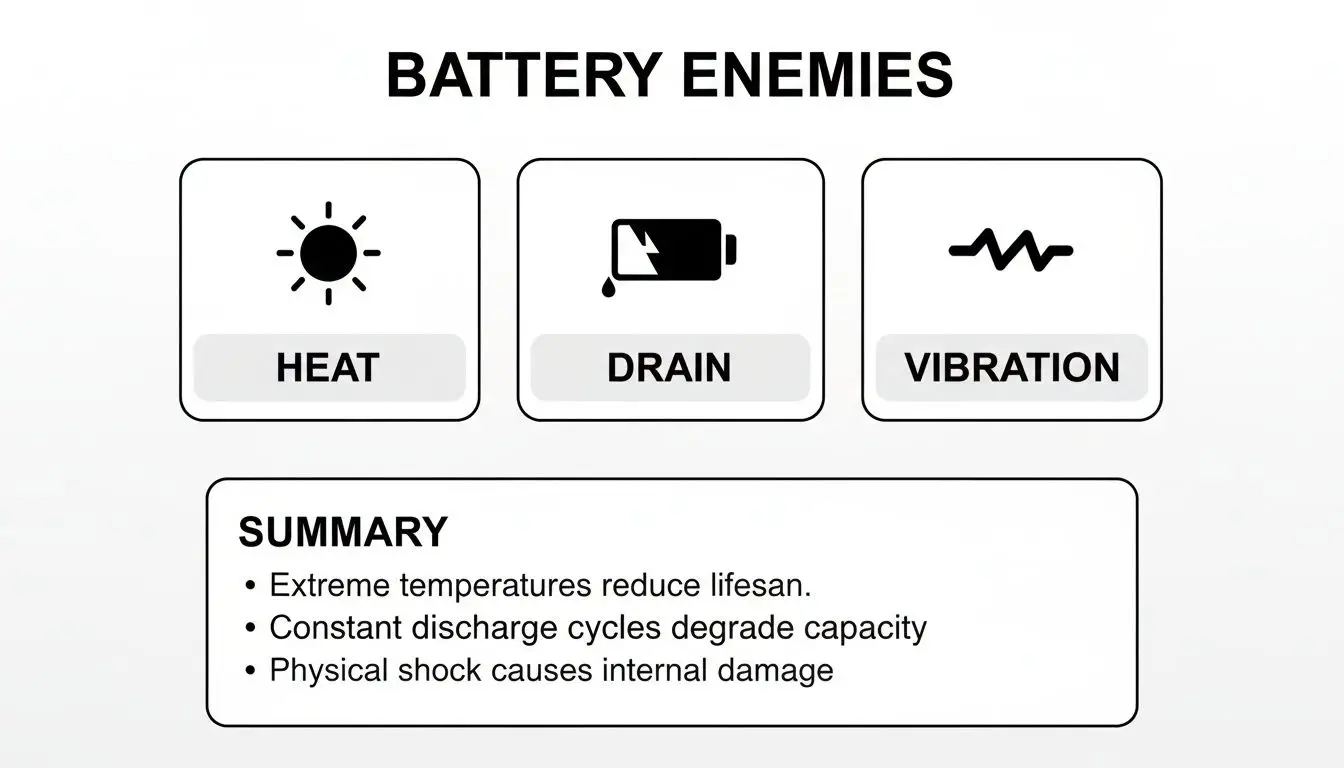
As illustrated, heat, parasitic drain, and vibration are constant threats. Fortunately, smart driving habits can mitigate these factors. Taking longer drives counteracts parasitic drain, while simple actions like parking in a garage or shaded area help reduce heat exposure.
Simple Maintenance Checks You Can Perform Yourself
You do not need to be a professional mechanic to contribute to your battery's health. Performing a few simple inspections every couple of months can prevent the inconvenience of being stranded by a dead battery. These checks are quick, easy, and highly effective.
Begin with a visual inspection. Open the hood and examine the battery. Look for cracks in the plastic casing or any signs of bulging or swelling on its sides. A swollen battery is a critical warning sign of internal failure and requires immediate replacement.
Addressing Terminal Corrosion
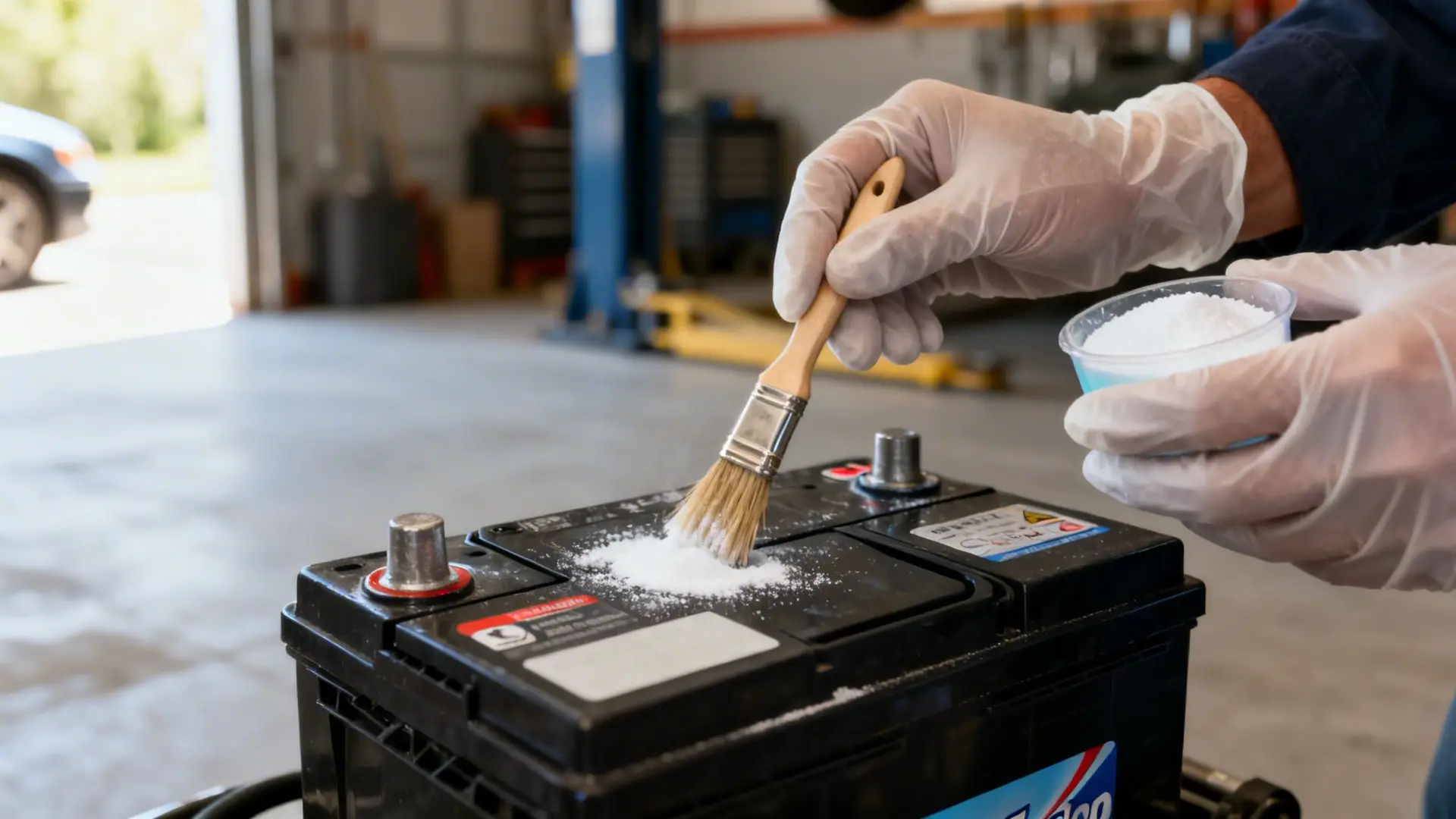
A common sight on battery terminals is a crusty, white or bluish-green deposit. This is corrosion, and it is a major impediment to battery performance.
This buildup acts as an insulator, creating high resistance in the electrical circuit. It obstructs the flow of electricity, preventing the battery from charging efficiently and from delivering the necessary power to start the engine.
In fact, it is estimated that 30% of all battery-related issues are caused by corrosion. This powdery substance can reduce power flow by as much as 50%.
Cleaning corrosion is straightforward. Create a paste using baking soda and water. Apply the paste and scrub the terminals with a wire brush or an old toothbrush. Rinse the area with a small amount of clean water and dry the terminals thoroughly.
For a detailed walkthrough, refer to our guide on how to clean your car battery terminals. After cleaning, applying a thin layer of dielectric grease can help prevent future corrosion.
Ensure the Battery Is Securely Mounted
Another simple but vital check is to confirm the battery is securely fastened. Your battery should be held firmly in place by a clamp or bracket.
If this hold-down is loose, the vibrations from normal driving can cause the battery to shake excessively. This constant movement can damage the delicate internal components, leading to short circuits and premature failure.
Gently attempt to move the battery. If it wiggles or shifts, the hold-down clamp must be tightened. This is a simple adjustment that can prevent a costly failure.
These maintenance practices provide a solid foundation for battery health. For further reading on charging systems, this guide offers expert tips for long battery life applicable to various battery types.
Alternatively, our technicians at Express Lube & Car Care can perform these checks for you. A full battery inspection is included with our services, where we check for corrosion and ensure the battery is secure, providing you with peace of mind.
Warning Signs That Indicate a Need for Professional Attention
While personal inspections are beneficial, some symptoms require professional diagnosis. Ignoring the warning signs of a failing battery can result in being stranded at an inconvenient time. These clues are your vehicle's way of indicating a problem before it becomes critical.
The most common indicator is a slow engine crank. This is characterized by a sluggish, groaning sound ("rur-rur-rur") when you turn the ignition key, as opposed to the usual crisp, rapid start. This labored cranking signifies that the battery is struggling to provide the high amperage required to turn the engine over and is often the first sign of impending failure.
Subtle Clues and Obvious Dangers
In addition to a slow crank, a weakening battery can manifest in other ways. Your vehicle's electronic systems are sensitive to voltage fluctuations and are often the first to exhibit problems.
- Dimming Headlights at Idle: If your headlights appear dim when the car is stopped (e.g., at a traffic light) but brighten upon acceleration, it is a classic sign that the battery is not maintaining a stable charge, forcing the alternator to compensate.
- Flickering Dashboard Lights: Weak or flickering interior or dashboard lights indicate the battery is struggling to meet the vehicle's electrical demands.
- Random Electrical Issues: A failing battery can cause a variety of strange electrical "gremlins." The radio may reset its presets, or power windows might operate more slowly than usual. These are not mere quirks but symptoms of an underlying electrical issue.
Finally, there are physical warnings that should never be ignored. A swollen or bloated battery case is an emergency. This indicates severe internal damage, typically caused by excessive heat, and poses a risk of sudden failure or leakage of hazardous battery acid.
The Importance of a Professional Load Test
A simple voltage check with a multimeter provides only a partial picture of battery health. A battery can register a healthy 12.6 volts while at rest but fail completely under an electrical load. For a deeper understanding of voltage readings, consult our guide on the car battery voltage chart.
This is why a professional 'load test' is indispensable.
A load test is a diagnostic procedure that measures a battery's ability to maintain its voltage while subjected to a significant electrical demand, simulating the strain of starting an engine. A healthy battery must maintain a minimum voltage level under this load for a specified duration.
A load test is the only definitive method for assessing a battery's true condition. At Express Lube & Car Care, our ASE-certified technicians utilize professional diagnostic equipment to perform accurate load tests. This provides a clear, data-driven assessment, enabling you to make an informed decision before you are faced with a non-starting vehicle.
Your Car Battery Questions, Answered
Even the most informed car owner can have questions about their vehicle's battery. Obtaining accurate information is crucial for proper maintenance. Here, we address some of the most common inquiries we receive from drivers, providing clear and practical answers.
How Often Should I Get My Car Battery Tested?
We recommend a professional battery test twice a year: once before the onset of summer and again before winter. These seasons place the greatest stress on a battery.
A simple voltage check performed at home only measures the battery's surface charge and does not reveal its true capacity. We conduct a professional load test, which simulates the high-current draw of starting an engine. This is the only reliable method to determine if a battery has the strength to function properly under demanding conditions. Consider it a preventative stress test that can identify a weakening battery long before it fails.
Is a Trickle Charger a Good Investment?
Yes, a trickle charger (or battery tender) is a valuable tool in two specific scenarios. First, if you own a vehicle that is stored for extended periods (weeks or months), a trickle charger is essential. It counteracts the battery's natural self-discharge process, preventing it from draining completely.
Second, they are highly beneficial for drivers whose routines consist primarily of short trips. As short commutes do not allow the alternator enough time to fully recharge the battery, a trickle charger can be used to slowly and safely top it off, maximizing its lifespan.
Why Do Car Batteries Have a Shorter Lifespan in Texas?
The primary reason is the region's sustained high heat. A car battery operates through a series of chemical reactions, and elevated temperatures accelerate these reactions in a detrimental way.
This constant heat leads to two major issues:
- Fluid Evaporation: The electrolyte solution inside the battery evaporates more quickly, exposing the internal lead plates and causing damage.
- Accelerated Corrosion: Heat also speeds up the natural degradation of the battery's internal components, which permanently reduces its ability to hold a full charge.
Consequently, while a battery might last five years in a more temperate climate, failure within two to three years is common in Texas.
Can I Install a New Battery Myself?
While it is technically possible, we generally advise against DIY battery installation for most modern vehicles. Today's cars are equipped with complex and sensitive electronic control units (ECUs) that manage everything from engine performance to infotainment systems.
An incorrect installation procedure can cause a voltage surge, potentially damaging these sensitive computers and resulting in a very costly repair. Professional installation ensures the correct battery type is used, the vehicle's computer systems are properly reset (if required), and the old battery is recycled according to environmental regulations.
When you need a battery check or a replacement, trust the experts. The ASE-certified technicians at Express Lube & Car Care have the proper tools and expertise to ensure your vehicle starts reliably every time. We offer $20 off batteries with our Express Lube Signature battery service! Stop by our Plano shop today for a quick and honest assessment.